What is the Best Way to Choose Shades Sunglasses?
Choosing the right Shades Sunglasses can be overwhelming. With countless styles and brands available, it's essential to make informed decisions. Renowned eyewear expert Dr. John Miller emphasizes, “A great pair of shades should enhance your look and protect your eyes.” His insights highlight the blend of fashion and function in selecting shades.
Understanding your face shape is crucial. Different styles suit various face types. For instance, round faces often benefit from angular frames that add definition. Popular aviators or oversized frames can also create impressive contrasts. Color is another key aspect. Darker lenses offer UV protection, while mirrored options elevate fashion appeal.
However, the search for perfect Shades Sunglasses often leads to impulse buys. It's easy to get drawn in by trendy designs. Reflect on the practicalities rather than just aesthetics. Try on different styles and consider comfort. After all, the goal is to find shades that feel good and look great. Taking time before purchasing can lead to more satisfying choices.
Understanding UV Protection and Its Importance in Sunglasses
Choosing the right sunglasses involves more than just style. Understanding UV protection is essential for safeguarding your eyes. Research shows that UV radiation can lead to cataracts and other eye diseases. The American Academy of Ophthalmology states that overexposure to UV rays can also cause sunburn on the cornea.
When selecting sunglasses, look for a pair that blocks 100% of UVA and UVB rays. Not all sunglasses offer strong UV protection. Reports indicate that many inexpensive pairs fail to meet safety standards. It’s crucial to check for proper labeling.
Tip: Always try on sunglasses in different lighting conditions. The tint should be comfortable and not distort colors. A darker lens doesn’t necessarily mean better UV protection.
Understanding polarization is also vital. Polarized lenses reduce glare, making them ideal for driving or water activities. Yet, they might not be suitable for everyone. Some drivers find difficulty in reading LCD screens while wearing polarized sunglasses.
Tip: Consult with an eye care professional. They can recommend the best lens options based on your lifestyle. Taking these precautions ensures your choices are both stylish and protective.
Different Types of Lens Materials and Their Benefits
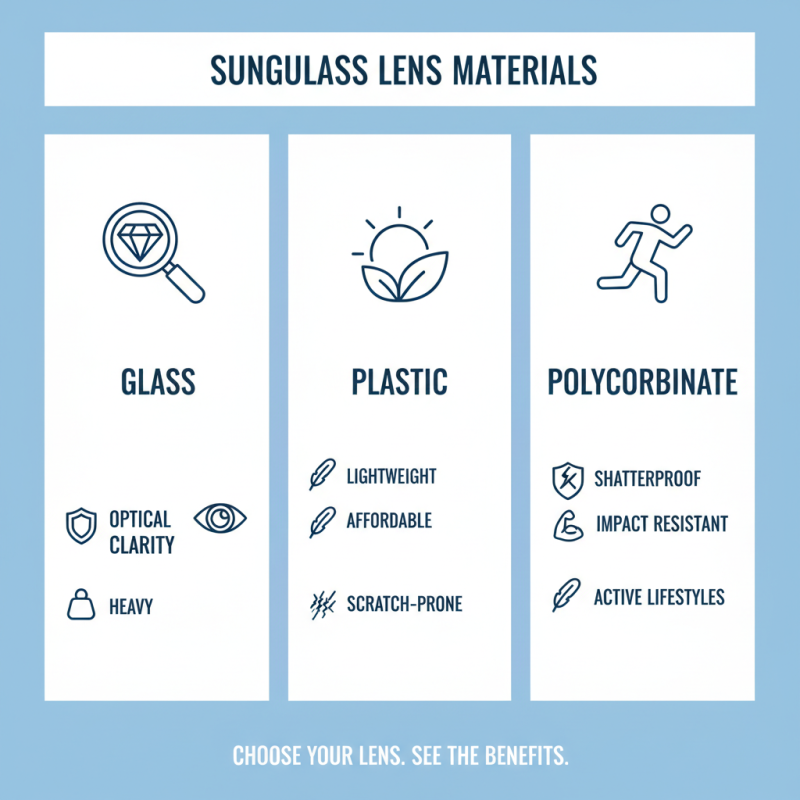
Choosing the right sunglasses involves understanding lens materials. Each type offers unique benefits tailored to different needs. Common materials include glass, plastic, and polycarbonate. Glass lenses are durable and scratch-resistant, providing excellent optical clarity. However, they can be heavy and shatter upon impact. Plastic lenses are lightweight and affordable, but they may scratch easily. Polycarbonate lenses are shatterproof and ideal for active lifestyles. They provide high impact resistance while remaining lightweight.
Tips for choosing the right lens material:
1. Consider your daily activities. If you're sports-oriented, opt for polycarbonate lenses for durability.
2. Evaluate your comfort. If heavy frames bother you, plastic lenses might be a better fit.
While many prefer the clarity of glass, be aware of its fragility. It's a trade-off between quality and practicality. Different environments also affect your choice—bright, sunny areas may benefit from different lens coatings that reduce glare. Always assess your environment before making a decision.
Choosing the Right Lens Color for Various Conditions
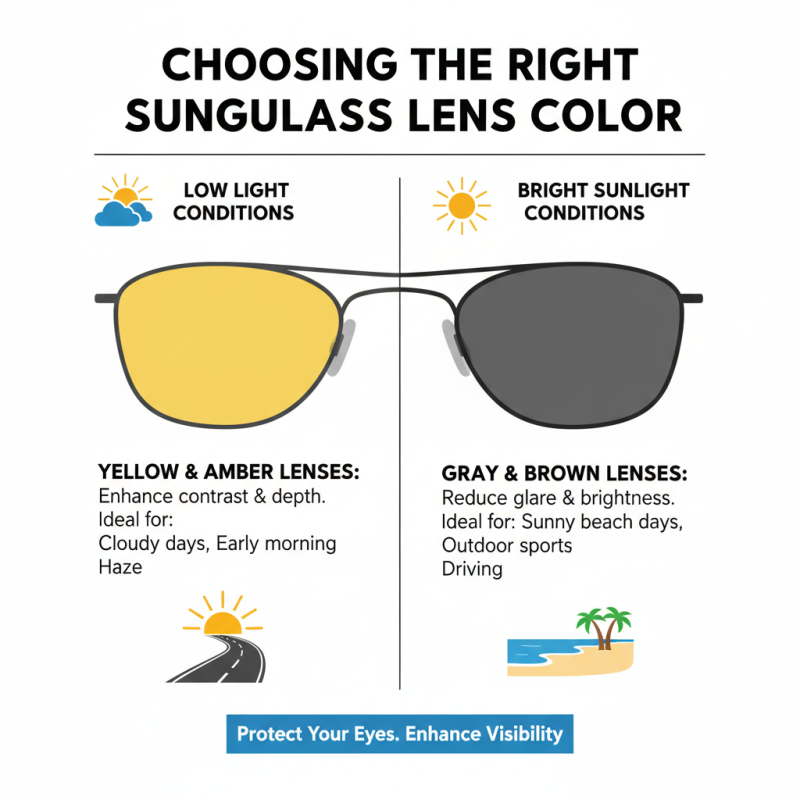
Choosing the right lens color for sunglasses is essential for protecting your eyes and enhancing visibility. Lighter lens colors, like yellow or amber, improve contrast and depth perception in low-light conditions. These shades are perfect for cloudy days or early mornings when visibility can be tricky. On the other hand, darker lenses, such as gray and brown, provide excellent protection against bright sunlight, making them suitable for sunny days at the beach or outdoor sports.
Mirrored lenses can reduce glare significantly, which is useful when you are near water or snow. However, consider that some mirrored coatings can make it harder to see in dark conditions. Each lens color has its pros and cons, and it is vital to reflect on your activities before making a choice. Different environments warrant different lens colors; you may find yourself switching styles based on your surroundings. For instance, while rose-colored lenses boost your mood in bright light, they may distort colors in the long run. Always prioritize comfort and clarity when selecting lens shades.
Styles and Frames: Finding the Perfect Fit for Your Face
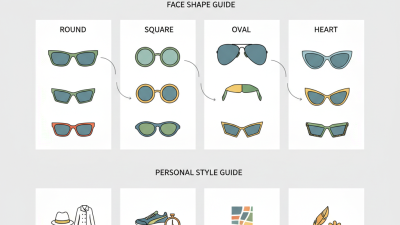
Finding the right sunglasses can be a challenge. Styles and frames play a crucial role in how well shades complement your face. Various face shapes—oval, round, square, and heart—require different frame designs for the best fit. According to a report by the American Optometric Association, around 75% of Americans need vision correction, making proper sunglasses more essential than ever. Choosing the right style can enhance your look while providing necessary UV protection.
Tips for selecting frames include examining your face shape. For round faces, angular frames add definition. Square faces benefit from softer curves. Oval faces have the flexibility to choose most styles. Heart-shaped faces should opt for wider frames at the bottom to balance their features.
Remember, comfort is key. Ill-fitting sunglasses can lead to headaches or discomfort during extended wear. A study from the Vision Council highlights that nearly 20% of individuals reported discomfort from poorly fitted eyewear. Aim for a snug fit without pressure points. The lens size and bridge width should match your facial proportions to ensure comfort and style.
Choosing the Best Shades: Styles and Frames for Different Face Shapes
This bar chart illustrates the recommended frame styles for different face shapes when choosing sunglasses. Each bar represents the number of styles that best complement the respective face shape.
Considerations for Prescription Sunglasses and Comfort Features
Choosing the right pair of sunglasses goes beyond style. For those who need prescription lenses, comfort is crucial. Proper fit can prevent headaches and discomfort. Ensuring the sunglasses are lightweight can make a significant difference during long wear. Pay attention to frame shape. A well-fitted frame should rest comfortably. Avoid any pinching or sliding.
Here are some tips for selecting prescription sunglasses:
- Look for polarized lenses. They reduce glare from surfaces like water. This feature is beneficial for outdoor activities.
- Consider lens tint. Different tints provide varying levels of protection from sunlight. Darker tints aren’t always the best for your eyes. They can limit visibility in low light.
- Check for UV protection. Ensure your sunglasses block 100% of UVA and UVB rays. This is key in preventing long-term eye damage.
Comfort features matter greatly.
Soft nose pads can enhance comfort for daily wear.
Adjustable temples help create a secure fit. Evaluate how the sunglasses feel while moving around. If they slip, they may not be the right choice.
Remember that finding a perfect pair may take time. Experiment with different styles to see what feels best. Not every frame shape suits every face.
Be open to adjustments for an ideal fit.