How to Choose Bifocal Glasses for Clear Vision?
Choosing bifocal glasses is essential for clear vision, especially for those over 40 years old. According to the American Optometric Association, nearly 60% of adults experience presbyopia, a natural age-related vision issue. Bifocal glasses help in addressing this challenge by combining multiple prescriptions in a single lens.
When selecting bifocal glasses, various factors come into play. The fit of the frames, the index of the lenses, and the specific prescription requirements significantly influence comfort and clarity. A study published in the Journal of Vision Research highlights that improper fitting can lead to eye strain, impacting user experience. It's essential to prioritize professional fitting for optimal results.
However, finding the right bifocal glasses is not always straightforward. Users may face challenges in adjusting to the segmented lenses. This transition period can be frustrating. Awareness of these potential difficulties is crucial for anyone embarking on their bifocal journey. Taking the time to research and consult with an eyewear specialist will lead to a more satisfying outcome.

Factors to Consider When Choosing Bifocal Glasses for Vision Clarity
Choosing bifocal glasses can be a bit challenging. There are several factors to consider for your optimal vision clarity. Comfort is key. The glasses should fit well on your nose and ears. An ill-fitting pair can lead to headaches or discomfort. It's important to try them on before you make a decision.
Lens material plays a significant role in how your glasses perform. High-index lenses can be thinner and lighter, which can enhance comfort. Don't overlook the prescription. An experienced optician will help you determine the correct measurements. A detailed eye exam is essential for accurate power settings.
Frame style is also important. Your frames should suit your face shape and personal taste. Heavy frames can create pressure and discomfort. Meanwhile, lighter frames can offer ease. You might find a stylish pair that fits your lifestyle and needs. Reflect on your daily activities. Will you wear them often? Be honest with yourself; the right choice will improve your vision and comfort immensely.
Types of Bifocal Lenses and Their Impact on Visual Performance
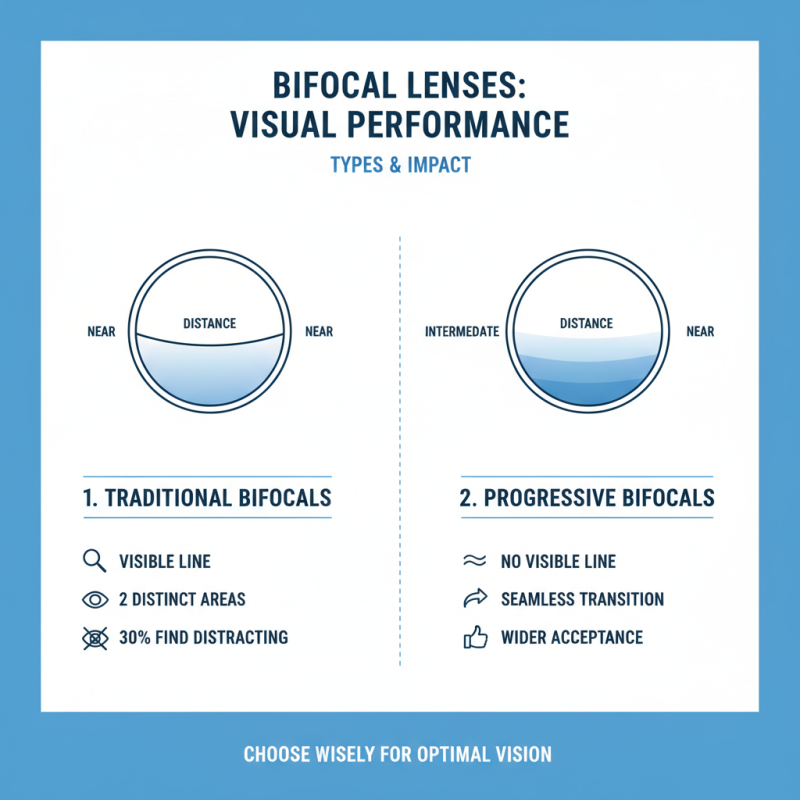
When selecting bifocal lenses, understanding the different types is crucial for optimal visual performance. There are primarily two types of bifocal lenses: traditional and progressive. Traditional bifocals feature a visible line that separates the lens into two distinct areas, one for distance and the other for near vision. This design can be effective but may be visually distracting for some users. Research indicates that approximately 30% of wearers find this style less appealing.
Progressive lenses offer a more gradual transition between distance and near vision, lacking the visible lines of traditional bifocals. This design can enhance aesthetic appeal and provide a more natural visual experience. A study published in the "Journal of Vision" shows that progressive lenses can improve overall satisfaction by about 40% compared to traditional designs. However, adapting to progressive lenses can be challenging, as some users report initial discomfort or difficulty adjusting their gaze to find the correct focal points.
It is essential to consider individual needs and preferences when choosing bifocal lenses. Some may prioritize visual clarity, while others might focus on comfort and style. Understanding the impact of these different types can guide users in making informed decisions. Exploring options and gathering professional advice can lead to better outcomes.
Understanding the Prescription: Identifying Your Unique Vision Needs
When selecting bifocal glasses, understanding your prescription is crucial. Each vision need is unique. A comprehensive eye exam assesses not just your vision acuity but also your specific requirements for different distances. According to the American Optometric Association, about 60% of people over 45 need some form of vision correction, like bifocals. This emphasizes the importance of a personalized approach.
Focus on providing your eye care professional with detailed information. Discuss any challenges you face in daily activities, such as reading or driving. Detailed feedback helps in crafting a prescription that meets all aspects of your vision needs. Data indicates that 75% of individuals who address their unique concerns report improved satisfaction with their glasses.
When reviewing your prescription, consider the measurements for each lens segment. Often, a perfect fit depends on small adjustments. Subtle misalignments can affect sharpness. Reflect on this before making a decision. Pay attention to your daily habits and environments where you need clarity. This level of detail is vital to ensure your bifocal glasses enhance your overall vision experience.
Importance of Lens Material and Coating for Bifocal Glasses
When selecting bifocal glasses, lens material and coating are crucial factors. The right material affects weight, comfort, and durability. For instance, lightweight plastic lenses are often more comfortable for all-day wear. On the other hand, glass lenses offer better scratch resistance but can be heavier. Consider your lifestyle when choosing.
Coatings also play a significant role. Anti-reflective coatings enhance clarity, reducing glare from screens and bright lights. This is especially beneficial for those who spend long hours in front of computers. Additionally, consider scratch-resistant coatings to prolong the lifespan of your glasses. Even with the best materials, neglecting these coatings can lead to quicker wear and tear.
It's important to understand that not all lens materials and coatings are equal. What works for one person may not work for another. Personal needs should guide your choices. Regularly reassessing your options can lead to better vision and comfort over time. Don't underestimate the impact of these details on your daily life.
Consulting an Eye Care Professional: A Key Step in Selection Process
Choosing bifocal glasses can be challenging. This is where consulting an
eye care professional plays a crucial role. According to the
American Optometric Association, 65% of adults require vision
correction. Experts recommend personalized assessments to ensure proper fit and function. An eye care professional
can provide insights into your specific vision needs, making the selection process more effective.
When you visit an ophthalmologist or optometrist, expect a thorough examination.
They will measure your visual acuity and assess how well you see at different distances. The
National Eye Institute states that proper fitting contributes to over 70% of
user satisfaction. If the lenses do not fit well, you may experience discomfort or blurred vision. Many individuals
find it hard to adjust to bifocals initially. A professional can suggest adjustments to ease the transition.
It’s not just about selecting lenses. The frame style also matters. A professional can help you
choose a frame that complements your lifestyle. Whether you need them for reading
or driving, the right choice enhances vision clarity. Many users overlook
this aspect, resulting in poor comfort and less effective vision
correction. Engaging with an eye care provider is invaluable for a successful
bifocal experience.