How to Choose the Best Reading Glasses for Clear Vision?
Choosing the right reading glasses is essential for optimal vision. Approximately 70% of adults require some form of vision correction as they age. This statistic underscores the increasing necessity of reading glasses. Poor vision can affect daily activities, work performance, and overall quality of life.
Experts recommend getting an eye examination before selecting reading glasses. The American Optometric Association states that routine eye checks can identify specific needs and adjustments. Factors such as frame style, lens material, and magnification strength play vital roles in ensuring clear vision.
Not all reading glasses are created equal. Some might prefer over-the-counter options, while others may need custom prescriptions. It's worthwhile to consider how often the glasses will be used and under what conditions. Each decision—frame color, shape, and lens type—can enhance or detract from experience. Investing time in understanding the options can lead to significant improvement, yet many overlook these details.

Understanding Presbyopia and Its Impact on Vision
Presbyopia is a common age-related vision condition. By the age of 40, about 50% of people experience it. The eyes gradually lose their ability to focus on nearby objects. This occurs due to changes in the lens, which becomes less flexible over time. Individuals may struggle to read small print or see fine details clearly.
A recent report from the American Optometric Association highlights that presbyopia affects nearly 1.3 billion people worldwide. Symptoms often lead to frustration and decreased quality of life. Many people find themselves holding reading materials at arm’s length to see clearly. This behavior indicates the increasing difficulty in maintaining focus on close tasks.
While presbyopia is unavoidable, understanding its impact is crucial. Regular eye exams can help detect changes early on. The right reading glasses can significantly improve everyday activities, whether it’s reading a book or using a smartphone. Statistical data suggests that nearly 90% of individuals using reading glasses report enhanced clarity. Choosing the right pair can make a notable difference, ultimately easing daily visual strain.
Identifying the Right Prescription for Your Reading Glasses
Choosing the right prescription for your reading glasses is crucial for clear vision. Understanding your eyesight is the first step. A professional eye exam helps determine your needs. During the exam, your eye doctor will measure your vision at various distances. They will also test for any underlying conditions that could affect your sight.
Once your prescription is ready, consider the types of lenses available. Single-vision lenses are common for reading, but multifocal options may suit those requiring different visual corrections. Remember, these details matter. The fit of the frames is equally important. Frames that slide down your nose can be frustrating during long reading sessions.
Many people overlook the significance of lens material. Lighter lenses can reduce fatigue. Scratch-resistant coatings can prolong the life of your glasses. Reflect on what matters most for your lifestyle. Whether you read for pleasure or work, the right glasses can enhance your experience. Experiment with different styles and consult with professionals to find what works best for you.
How to Choose the Best Reading Glasses for Clear Vision?
| Factor |
Description |
Recommended Value |
| Prescription Strength |
Indicates the magnification needed for clear reading. |
+1.00 to +3.00, depending on age and vision |
| Lens Type |
Different types of lenses offer various benefits. |
Single vision, bifocal, or progressive |
| Frame Style |
Affects comfort and personal style. |
Full-rim, semi-rimless, or rimless |
| Lens Material |
Different materials affect weight and durability. |
Polycarbonate, high-index, or standard plastic |
| Coating Options |
Enhance lens function and longevity. |
Anti-reflective, scratch-resistant, or blue light blocking |
Choosing Frame Styles and Materials for Comfort and Durability
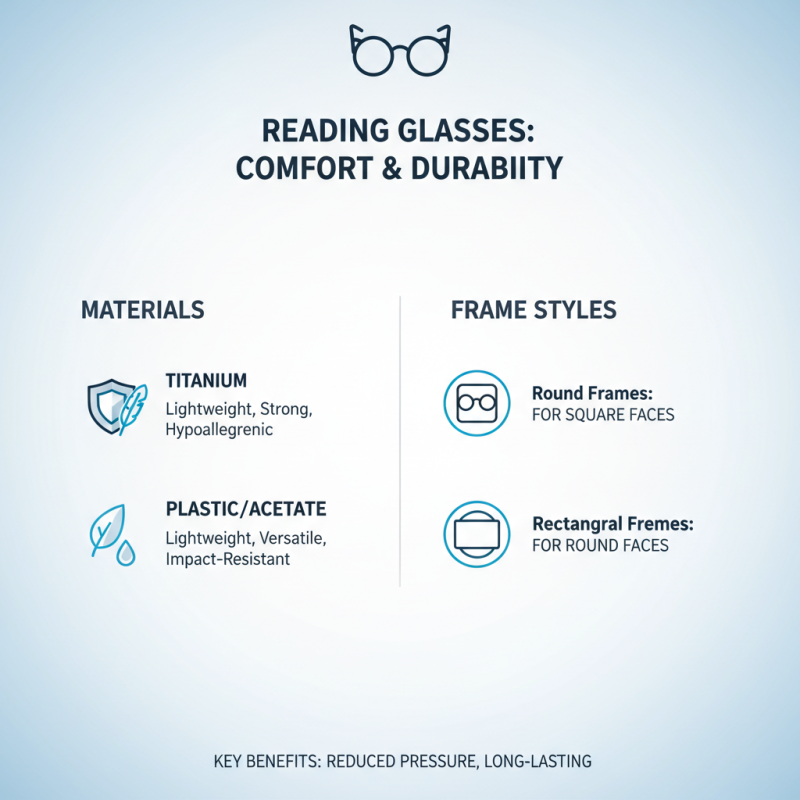
Choosing the right frame style and material for reading glasses is crucial. Comfort should be a priority, especially if you spend long hours reading. Lightweight materials like titanium or plastic can reduce pressure on your nose and ears. These materials are also durable, ensuring your glasses last longer. Consider styles that fit your face shape. For example, round frames suit square faces, while rectangular frames can soften round faces.
The fit of the glasses is essential. Poorly fitting frames can become uncomfortable during extended use. Try different styles to see what feels best. Also, think about the nose pads. Adjustable nose pads can provide a personalized fit. However, you may require regular adjustments, which can be inconvenient. Remember, aesthetics matter too. The color and design of the frames should reflect your personality while remaining functional.
While it's easy to get distracted by trends, focus on what improves your vision. Avoid frames that are too heavy or tight. They can lead to headaches or discomfort. It’s important to strike a balance between style and comfort. In the end, function should guide your choices, but don’t be afraid to experiment. Finding the perfect reading glasses may take time, and that’s okay.
Lens Options: Single Vision, Bifocals, and Progressives Explained
When selecting reading glasses, understanding lens options is crucial. Single vision lenses provide a straightforward solution. They are designed for one specific distance, making them ideal for reading or close work. If you spend hours looking at books or screens, these lenses can significantly enhance clarity. However, they offer no versatility for different distances.
Bifocals present a practical option for those who need vision correction for both near and far distances. With a distinct line separating the two prescriptions, users can effortlessly switch from reading to looking up. Yet, this division may cause a sudden adjustment period. People might experience a learning curve in finding the right angle for viewing.
Progressive lenses offer a smooth transition between different focal distances. They blend prescriptions seamlessly, eliminating the visible line of bifocals. This feature provides a natural viewing experience. However, some users might feel disoriented when first wearing progressives. It’s important to consider your comfort and vision needs when choosing among these options. Each lens type has benefits and drawbacks, making careful consideration necessary.
Comparison of Lens Options for Reading Glasses
This chart illustrates the user preferences for different types of reading glasses lenses. Single vision lenses are the most preferred option, followed by bifocals and progressives.
Tips for Proper Care and Maintenance of Your Reading Glasses
Taking care of reading glasses is essential for ensuring clear vision. Many people overlook how maintenance impacts their longevity. According to a study by the Vision Council, nearly 75% of adults in the U.S. require vision correction. Proper care helps protect your investment and enhances your daily experience.
Clean your glasses regularly with a microfiber cloth. Avoid using paper towels or clothing, as these can scratch the lenses. Use a gentle lens cleaner or warm soapy water for deep cleaning. Taking just a moment to do this can extend the life of your glasses significantly.
Store your reading glasses in a protective case when not in use. This simple step prevents scratches and damage. Additionally, avoid leaving them in places where they may get stepped on or crushed. A recent survey indicates that 40% of people damage their glasses within the first six months of purchase due to improper handling. Being mindful of how you treat your reading glasses can prevent costly replacements.