Leave Your Message

How to Choose the Best Rectangle Reading Sunglasses

Choosing the right Rectangle Reading Sunglasses is more than selecting a sharp frame shape. The lenses must support close reading while reducing glare outdoors. The World Health Organization’s World Report on Vision estimates that at least 2.2 billion people live with near or distance vision impairment. It also reports that unaddressed presbyopia remains a major global need. These figures show why comfortable, accurate reading correction matters.

Fit comes first. A qualified optician can check reading power, pupillary distance, lens height, and frame stability. Rectangle frames often provide a broad horizontal field, which can feel practical when reading menus, maps, or e-books. However, a wider frame may slide down the nose. That small movement can blur the ideal reading area. It deserves attention.

Sun protection matters too. The American Academy of Ophthalmology recommends sunglasses that block 99% to 100% of UVA and UVB rays. The Vision Council’s consumer research also highlights sunglasses as a common tool for managing bright light and visual comfort. Still, darker lenses do not automatically provide stronger UV protection. That assumption is easy to make.

A useful pair should match your prescription, daily distance, and face shape. Lightweight temples, spring hinges, and anti-reflective coatings may improve everyday comfort. Polarized lenses can reduce reflected glare from roads and water, but they may affect some digital displays. My own first shortcut would be choosing power by age alone. That is not reliable. Reading strength, tint, lens quality, and fit must work together. This guide explains how to compare Rectangle Reading Sunglasses with greater confidence, while recognizing when professional advice is the safer choice.
How to Choose the Best Rectangle Reading Sunglasses

Key Features of Rectangle Reading Sunglasses

How to Choose the Best Rectangle Reading Sunglasses

Key Features of Rectangle Reading Sunglasses

Choosing rectangle reading sunglasses starts with useful features, not only a sharp silhouette. The World Health Organization’s World Report on Vision (2019) estimates that 2.2 billion people experience vision impairment. At least 1 billion cases could have been prevented or remain unaddressed. That figure supports careful lens selection. Choose a reading strength that keeps small print clear at 35–40 centimeters. An eye examination is safer than guessing, especially when each eye needs different correction.

Lens protection matters outdoors. Look for documented 99–100% UVA and UVB filtering, consistent with U.S. Food and Drug Administration consumer guidance. Dark lenses alone do not guarantee protection. They may only reduce brightness. Polarization can reduce reflected glare from pavement or water, but it does not replace UV filtering. Check the label and seller information. Missing documentation is a warning sign.

Fit affects real reading comfort. The rectangular frame should stay level without pressing your temples. Your pupils should sit near the lenses’ optical centers. A wide frame can shift the reading area outward. A narrow bridge may leave red marks after twenty minutes. Try reading a menu while turning your head slightly. The print should remain clear, not warped. I would not claim one rectangle suits every face; frame shape is only a starting point. Even careful choices can fail when the nose fit is overlooked. Fit matters.

How to Match Rectangle Frames With Your Face Shape

How to Choose the Best Rectangle Reading Sunglasses

How to Match Rectangle Frames With Your Face Shape

Rectangle frames create clear angles, so they work especially well with round or oval faces. The straight top line adds structure to softer cheeks. For a round face, choose a frame slightly wider than your cheekbones. This can make the face appear longer and more balanced. Oval faces have more flexibility, but extremely narrow frames may look undersized.

Square faces need a more careful approach. Strong rectangular corners can repeat the jawline and make the features appear heavier. Try softened rectangles with gently curved edges. Heart-shaped faces often suit medium-width frames with a lighter lower rim. They can balance a broader forehead and narrower chin. Long faces may benefit from deeper lenses rather than very wide frames. A taller frame can visually shorten the face.

Fit matters more than a perfect shape chart. The frame should rest securely without pressing your temples. Its bridge should stay in place when you look down at a book. Check that your pupils sit near the lens centers. I once chose a frame that looked excellent but slipped during reading. That mistake changed my fitting habits. Measure your current comfortable glasses, then compare lens width and bridge size. For prescription reading sunglasses, consult a qualified optician about the reading strength and verified UV protection. Small differences in lens position can affect comfort, even when the frame looks right.

Choosing the Right Lens Magnification and Material

How to Choose the Best Rectangle Reading Sunglasses

Choosing the right lens magnification matters more than the frame shape. Reading sunglasses should make small print clear without creating pressure around your eyes. Start with the lowest useful strength, often +1.00 or +1.50, and test it at your usual reading distance. If text looks sharp only when held too close, the power may be too strong. Unequal vision between your eyes also requires professional advice, because standard readers use the same strength in both lenses.

Lens material affects comfort, safety, and appearance. Lightweight polycarbonate resists impact and suits active outdoor use. CR-39 plastic can offer clear vision with a lighter feel. Stronger prescriptions may look slimmer with high-index material. Add scratch resistance and reliable UV protection for regular sunlight exposure. Rectangle lenses can leave side gaps if they are too narrow, allowing glare to enter.

Tips: Take a small printed label outside and check it through the sunglasses. Try them for ten minutes, not ten seconds. Watch for headaches, blurred edges, or facial pressure. A polished frame can still be the wrong choice. If discomfort continues, arrange a complete eye examination rather than increasing magnification yourself.

How to Choose the Best Rectangle Reading Sunglasses - Choosing the Right Lens Magnification and Material
Selection Factor Available Option Key Facts Best For Important Considerations
Reading Magnification +1.00 to +1.50 Provides a mild boost for small print at close range. Early presbyopia, occasional readers, and menus. Choose the lowest strength that gives clear, comfortable text without squinting.
Reading Magnification +1.75 to +2.25 Offers moderate near-vision assistance for everyday reading. Books, newspapers, tablets, and general indoor or outdoor use. Higher power is not automatically better; excessive magnification may cause blur or eye strain.
Reading Magnification +2.50 to +3.50 Provides stronger near correction for more advanced presbyopia. Small print, labels, crafts, and detailed close-up work. These powers usually have a shorter comfortable working distance and should be selected carefully.
Magnification Testing Print-size comparison Testing several powers with actual reading material helps identify the clearest option. People purchasing non-prescription readers. Test both eyes together in normal lighting and at the distance where you usually read.
Lens Material CR-39 plastic Provides good optical clarity and is generally lighter than glass. Everyday reading sunglasses and casual wear. It is less impact-resistant and more scratch-prone than polycarbonate or Trivex unless properly coated.
Lens Material Polycarbonate Lightweight and highly impact-resistant, with built-in ultraviolet protection in many lens designs. Active use, travel, sports, and households where impact resistance matters. It can show more chromatic aberration than some other materials and benefits from an anti-scratch coating.
Lens Material Trivex Combines low weight, strong impact resistance, and good optical performance. Active wearers who want a balance of comfort, safety, and clarity. It may cost more than basic plastic and may not be available in every ready-made magnification.
Lens Material High-index plastic Uses a thinner lens design for stronger prescriptions. Custom prescription reading sunglasses with higher plus powers. It is most useful when thickness or appearance is a concern; anti-reflective treatment can improve visual comfort.
Lens Material Glass Offers excellent optical clarity and strong scratch resistance. Stationary, low-impact environments where optical precision is the priority. Glass is heavier and can break, making it less suitable for sports, travel, or active use.
Ultraviolet Protection 100% UVA and UVB protection Sunglasses should block both UVA and UVB radiation; lens darkness alone does not indicate UV performance. All outdoor users, including people who wear reading sunglasses for short periods. Look for a clearly stated UV400 or 100% UVA/UVB protection specification.
Lens Tint Gray Usually maintains relatively natural color perception while reducing overall brightness. Driving, walking, and general daylight use. Tint density should reduce glare without making reading text uncomfortably dark.
Lens Tint Brown or amber Can increase perceived contrast and provide a warmer visual appearance. Variable light conditions and outdoor reading. Colors may appear less natural than with a neutral gray tint.
Lens Tint Green Can reduce brightness while preserving a balanced visual impression. General outdoor activities and comfortable daytime wear. Check the tint in realistic lighting because color preference is subjective.
Polarization Polarized lenses Reduce glare reflected from surfaces such as water, glass, and roads. Outdoor reading near reflective surfaces, boating, driving, and bright beaches. Some digital screens may appear darker or show viewing-angle effects through polarized lenses.
Rectangle Frame Fit Moderate lens height and stable bridge fit Adequate lens height helps position the reading zone in front of the eyes. Readers who frequently switch between distance viewing and close reading. The frame should not slide, pinch the temples, or sit so low that the reading area is difficult to access.
Face Proportion Frame width close to face width A balanced rectangle frame can provide stable coverage without excessive pressure. Most face shapes when the frame is correctly sized. Compare the frame width with the distance between the temples; oversized frames may shift the optical centers.
Surface Treatments Anti-scratch and anti-reflective coatings Anti-scratch coatings improve durability, while anti-reflective coatings can reduce distracting reflections. Frequent readers, commuters, and people using screens outdoors. Coatings do not make lenses scratch-proof; clean them with water or lens cleaner and a microfiber cloth.
Prescription Need Ready-made readers versus custom prescription lenses Ready-made readers generally provide the same power in both eyes; prescription lenses can correct unequal power, astigmatism, or other vision needs. Ready-made readers for simple near tasks; prescription lenses for individualized correction. Seek a comprehensive eye examination if vision is persistently blurred, unequal between eyes, or accompanied by headaches or eye discomfort.

Evaluating Comfort, Fit, UV Protection, and Frame Quality

How to Choose the Best Rectangle Reading Sunglasses

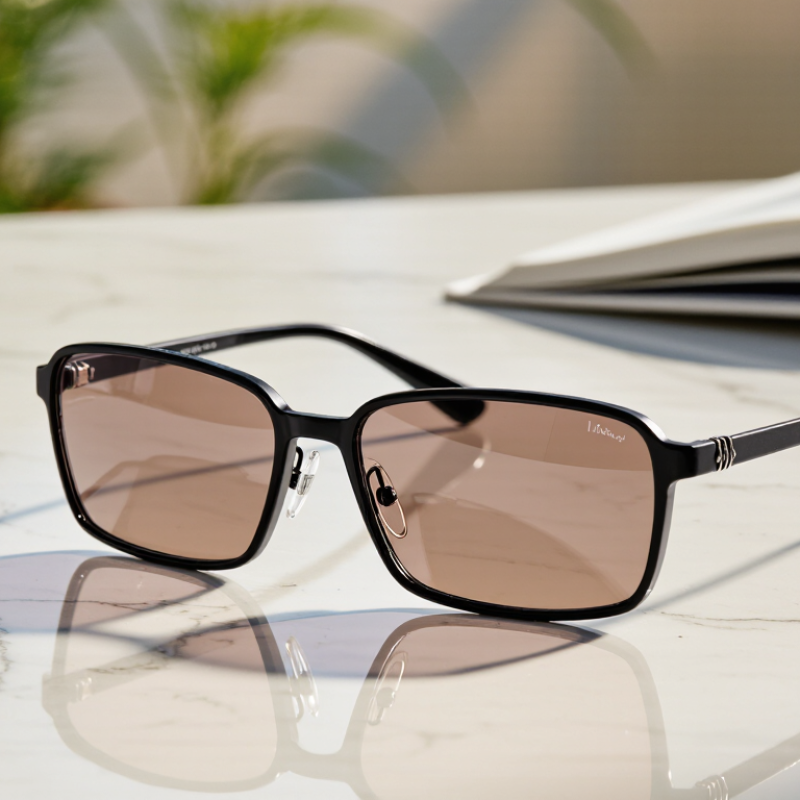
Rectangle reading sunglasses should feel stable before they look stylish. A frame that presses behind your ears can cause headaches during a long walk. Check that the bridge rests evenly, without leaving red marks. The lenses should sit close enough to block side glare, but not touch your eyelashes. Rectangle shapes often suit rounder faces, yet face shape guides choice rather than deciding it. I have found that a slightly wider frame can feel more comfortable, even when its measurements look less precise.

UV protection deserves stricter attention. The World Health Organization estimates that up to 20% of cataract cases may be linked to ultraviolet exposure. Choose lenses marked UV400 or 99–100% UVA and UVB protection. Darker lenses are not automatically safer. Poorly filtered dark lenses may encourage wider pupils and increase exposure. Reading power should also match your task, because excessive magnification can create blur and eye strain. A qualified optical professional can check this more reliably than guesswork.

Tips: Wear the sunglasses for ten minutes before buying. Look down, turn your head, and smile. They should not slide or pinch. Inspect hinges, lens edges, and frame joints for uneven gaps. Lightweight acetate or durable injection-molded materials may improve daily comfort, but material names alone prove little. Ask for impact and UV documentation. Some online claims remain vague. That is worth questioning.

Comparing Styles, Uses, and Prices Before Buying

How to Choose the Best Rectangle Reading Sunglasses

Rectangle reading sunglasses combine visual assistance with outdoor protection, but their value depends on more than appearance. I have found that medium-width frames suit most faces without pressing the temples. A slightly curved top can soften angular features. However, very wide frames may slide during walking. Fit matters more than fashion.

Consider where you will use them. For reading menus on a sunny patio, choose clear, evenly tinted lenses with a suitable reading strength. Polarized lenses can reduce glare from tables, roads, and water, although polarization does not replace UV protection. Check that the lenses provide full UVA and UVB protection. For driving, avoid very dark lenses or strong magnification that makes distance changes uncomfortable. Indoor reading usually needs separate clear lenses.

Prices vary because of lens quality, frame materials, coatings, and prescription options. Low-cost pairs can work well for occasional use, but uneven distortion may cause eye strain. Mid-range sunglasses often offer better hinges and more consistent lenses. Expensive does not always mean better. I once chose a stylish pair with weak hinges, and the savings felt temporary. Check the return policy, lens markings, and frame alignment before buying. Try reading small print for several minutes. If the words swim or your nose feels pressured, reconsider the purchase. A dependable pair should feel almost boring after a few hours.