What are Computer Eyeglasses and How Do They Work?
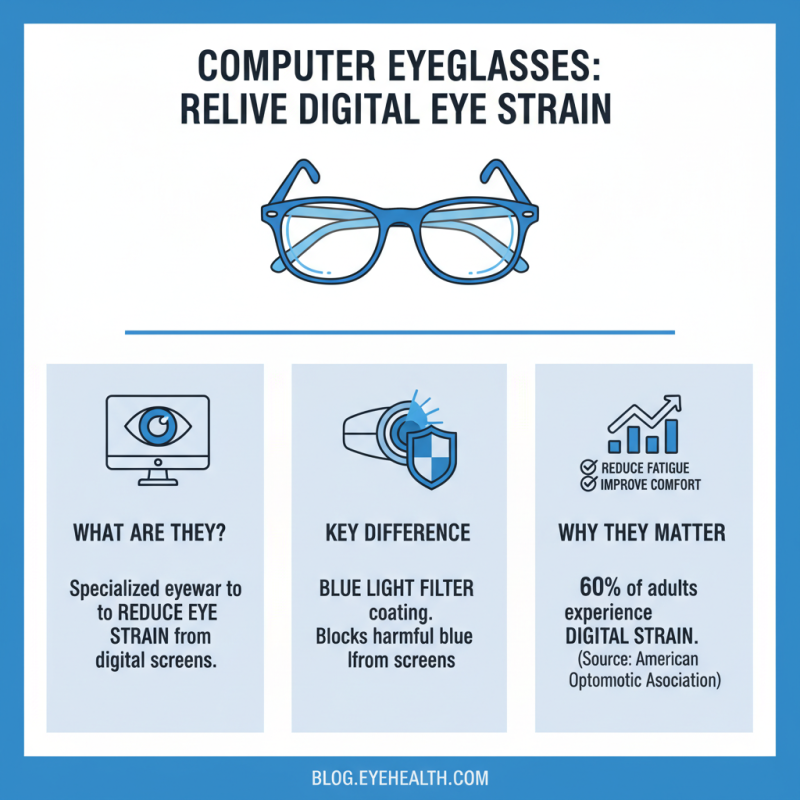
In today’s digital age, countless hours are spent staring at screens. This prolonged exposure can lead to digital eye strain, often termed as computer vision syndrome. A recent report by the American Optometric Association indicates that nearly 60% of American adults experience visual discomfort from prolonged screen use. As a result, the demand for solutions has surged.
Enter Computer Eyeglasses, a specialized eyewear designed for screen usage. According to Dr. Linda Chao, an expert in optical health, "Computer eyeglasses are a critical tool for anyone spending extensive time on digital devices." These glasses provide lens adjustments that optimize viewing angles and reduce glare. They often feature blue light filtering to mitigate eye strain and improve comfort.
However, as beneficial as they are, not all Computer Eyeglasses are created equal. Some users report discomfort or insufficient relief. This pointer leads to a need for personalized fittings and consultations. Users must be educated about correct usage to truly benefit from these innovative devices. Thus, the journey towards comfort involves more than just acquiring a pair; it requires an understanding of one's unique visual needs.
Understanding Computer Eyeglasses: Definition and Purpose
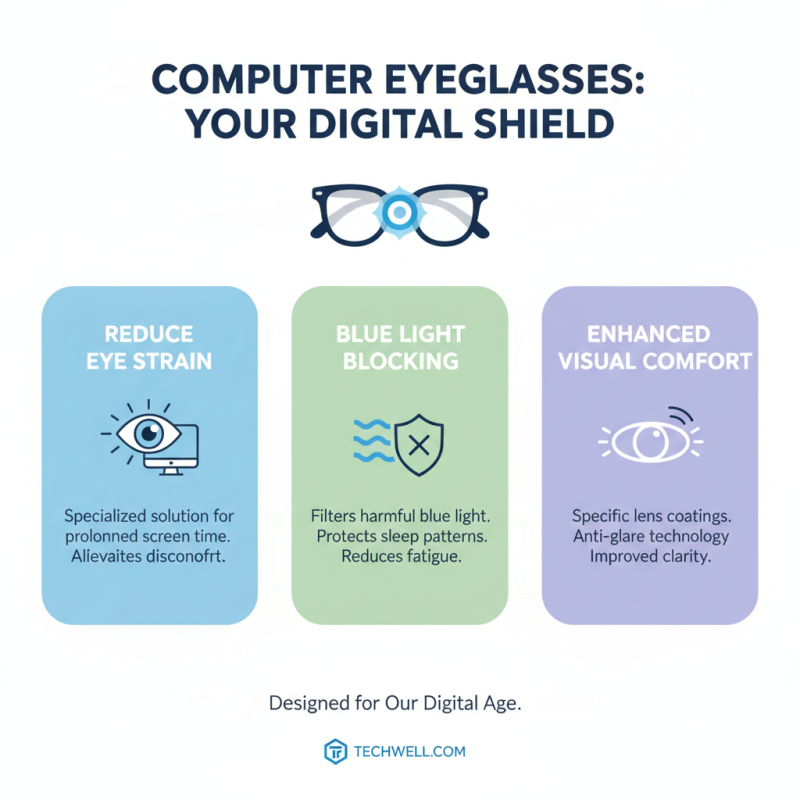
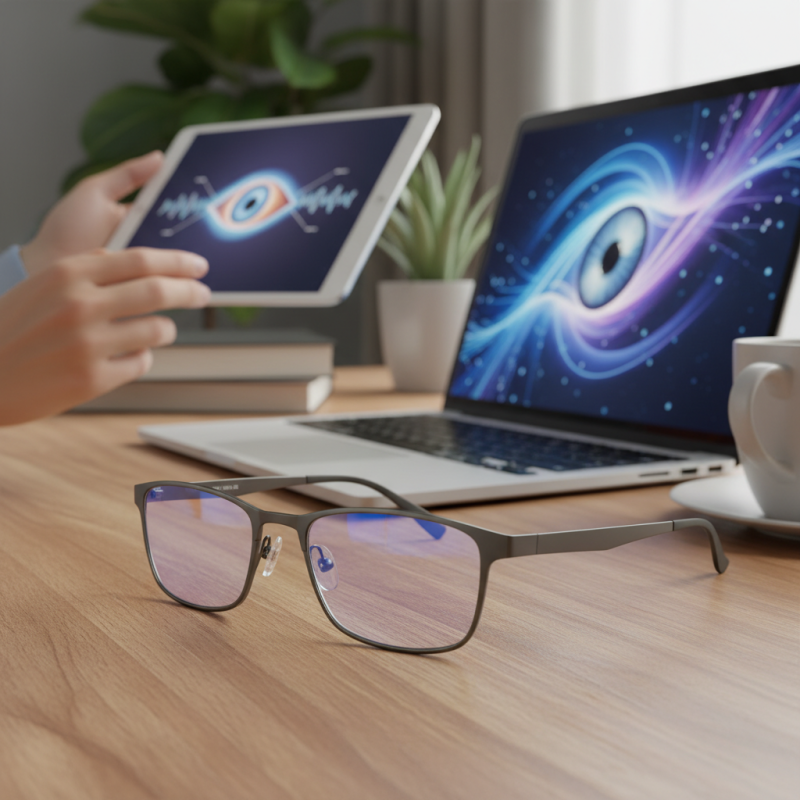
Computer eyeglasses are specialized eyewear designed to reduce eye strain caused by
prolonged screen time. They often come with a blue light filter. This filter blocks harmful blue light emitted from digital devices,
which can disturb sleep patterns. Many users report feeling less fatigued after wearing them.
These glasses usually have an anti-reflective coating. This feature minimizes glare from screens and fluorescent lighting.
People might notice how these glasses improve their focus and clarity. However, not everyone finds them comfortable initially.
Some users may need time to adjust. Others might feel they draw too much attention.
In addition, the lens design can vary. Some are optimized for close-up viewing, while others accommodate different tasks.
Finding the right pair can be challenging. It’s crucial to consider personal preferences and needs. Experimentation might be necessary
to discover what works best. Occasionally, users might find them a bit heavy or awkward. This requires ongoing reflection about comfort and usability in daily life.
Benefits of Using Computer Eyeglasses for Digital Screen Users
Computer eyeglasses are designed for people who spend long hours in front of screens. These glasses help reduce eye strain and discomfort. Many users find they can work longer without experiencing fatigue. The special lenses filter blue light, which is emitted by digital devices. This protection can lead to a more comfortable viewing experience.
The benefits of using computer eyeglasses extend beyond just reducing eye strain. Users may notice improved focus and clarity. Some even report better sleep quality after reducing blue light exposure. However, it's important to remember that these glasses are not a cure-all. Regular breaks from screens are still necessary. Adjusting screen brightness and distance can also make a difference.
Some people may not fully appreciate the impact of screen use on their eyes. There can be a tendency to overlook the importance of eye care. Small adjustments can lead to significant changes in comfort during digital tasks. Many users find that computer eyeglasses enhance their productivity. Yet, they should not replace healthy screen habits. Balancing screen time with other activities remains crucial.
What are Computer Eyeglasses and How Do They Work? - Benefits of Using Computer Eyeglasses for Digital Screen Users
| Feature |
Description |
Benefits |
| Blue Light Filtering |
Blocks harmful blue light emitted from screens. |
Reduces digital eye strain and enhances visual comfort. |
| Anti-Reflective Coating |
Minimizes glare from screens and overhead lighting. |
Improves clarity and reduces distraction from reflections. |
| Comfortable Fit |
Designed for prolonged use with ergonomic frames. |
Allows users to work longer without discomfort. |
| Prescription Options |
Available with customized prescriptions. |
Ensures optimal vision for users needing corrective lenses. |
| Stylish Designs |
Variety of fashionable frames and colors. |
Allows users to express personal style while protecting eyes. |
Differences Between Computer Eyeglasses and Regular Eyewear
Computer eyeglasses are a specialized type of eyewear designed to reduce eye strain. They are not the same as regular glasses. One key difference is their lens coating. Computer glasses often have blue light filters. This feature helps block harmful blue light emissions from screens. A report by the American Optometric Association states that nearly 60% of adults experience digital eye strain. This highlights the growing need for computer eyeglasses.
Another distinction lies in the prescription. Regular eyewear is often made for distance or proximity vision. However, computer eyeglasses typically provide a different focal length. This unique adjustment aids users in focusing on screens comfortably. Studies show that 70% of people working at a computer for more than two hours report discomfort. These data points underline why proper eyewear choices matter. Yet, many continue to use regular glasses for extended screen time, risking increased strain and fatigue.
Users may also notice that computer glasses feel different on their faces. They often have a wraparound design, which helps in reducing glare. The adjustment period can be challenging. Some may feel disoriented initially. As users adapt, the relief from digital strain can be significant. Ultimately, understanding the nuances can help in making better choices for eye health.
Choosing the Right Computer Eyeglasses for Your Needs
Choosing the right computer eyeglasses can greatly improve your comfort and productivity. Start by considering your specific needs. How many hours do you spend in front of screens? If it’s over two hours daily, specialized eyewear might be crucial.
Next, think about the lens type. Blue light filtering lenses are popular. They reduce eye strain and may help with sleep. Anti-reflective coatings can also enhance clarity. Keep in mind that not all coatings suit everyone. It’s a good idea to try different options before settling.
Don't forget about the frame style. A lightweight frame might be more comfortable for long hours. Look for adjustable nose pads for a custom fit. Ensure the glasses fit well. Ill-fitting eyewear can create headaches or discomfort. It’s okay to experiment until you find the perfect pair.
Computer Eyeglasses Usage Statistics
The chart above illustrates the percentage of computer eyeglasses usage among different age groups. As seen, younger adults aged 18-34 have the highest usage at 65%, compared to 55% for those aged 35-54, and 40% for adults aged 55 and above.